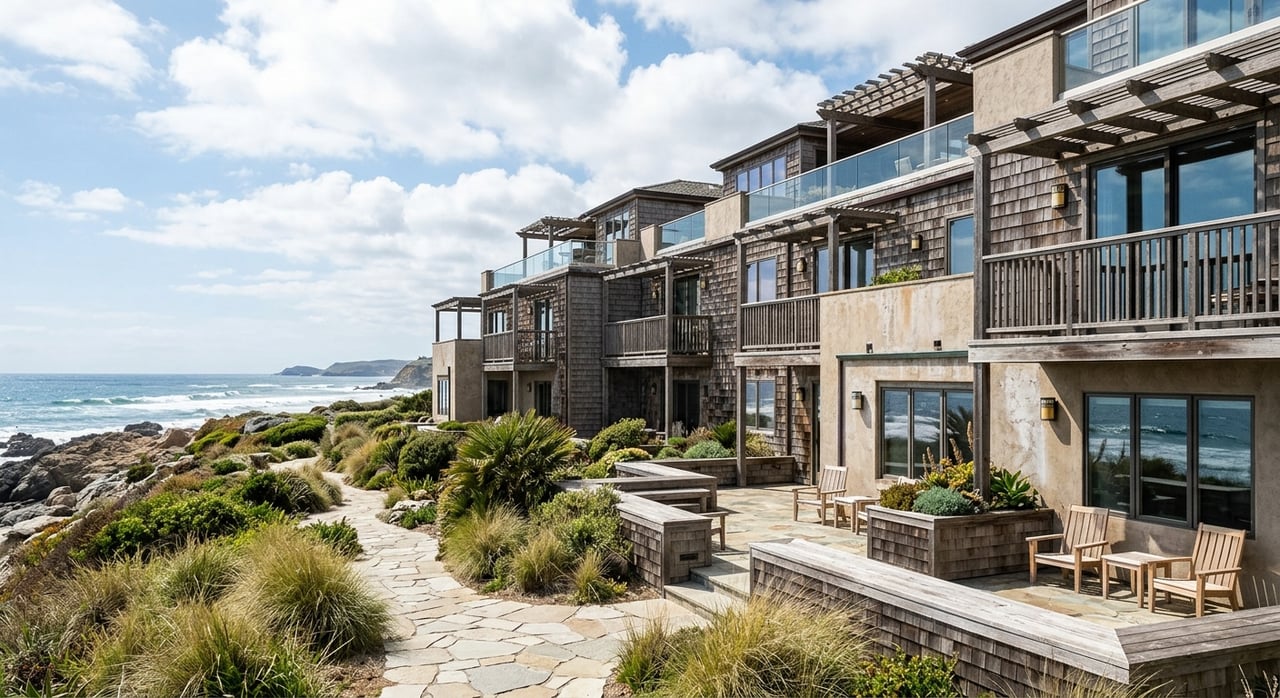
Wondering whether an oceanfront condo in Kihei is really the best fit when you live off-island? It is a smart question, because in Kihei, the view is only part of the ownership story. If you are buying a second home, a vacation property, or a condo with rental potential, the right choice depends on pricing, upkeep, rental legality, and how hands-on you want ownership to feel. Let’s dive in.
Why Kihei location matters
Kihei is not a market where every waterfront condo works the same way. Maui County describes this coastline as partly sheltered by Lanai and Kahoolawe, but still affected by winter north Pacific swell and summer south swell, which can change beach conditions and shoreline profile over time.
That matters even more today because Maui County’s 2024 shoreline rule update ties shoreline setbacks to projected erosion based on 3.2 feet of sea-level rise. The county also discourages shoreline hardening such as seawalls because those measures can worsen erosion and reduce beach access. For you as a remote owner, that means oceanfront value comes with a real coastal-hazard overlay, not just a premium view.
At the same time, Kihei offers strong public beach access. County information for places like Cove Beach Park and Kalama Park highlights parking, restrooms, showers, and easy access points. So if you are considering a mauka or across-the-road condo, you may still be close to the beach lifestyle without owning directly on the shoreline.
Oceanfront condo advantages
Oceanfront condos in Kihei usually deliver the strongest first impression. You get immediate access to the water, wide-open views, and the kind of setting many second-home buyers and vacation guests picture when they think about Maui.
For remote owners, that can also support a more turn-key ownership model in the right building. Current examples in Kihei include oceanfront listings that are marketed as fully furnished and hotel-zoned, with short-term vacation rental potential. Listings like 760 S Kihei Rd #202 at $1.3 million with $1,174 monthly HOA dues, Royal Mauian 206 at $1.879 million with $1,098 monthly HOA dues, and Kihei Surfside 213 at $1.0 million with $1,387 monthly HOA dues show the kind of pricing and fee range buyers may see in this segment.
Another advantage is premium positioning. If your goal is to own a condo that feels special every time you arrive, oceanfront usually delivers that emotional payoff more directly than inland or across-the-road options.
Oceanfront condo trade-offs
The biggest trade-off is exposure. Oceanfront buildings face more salt, wind, and storm-driven moisture, and FEMA coastal-construction guidance notes that salt spray can speed up corrosion of building materials.
That does not make oceanfront ownership a bad choice. It simply means you should expect maintenance planning to matter more, especially if you live elsewhere and rely on others to monitor the property. Windows, lanais, exterior systems, and common elements may need closer attention near the shoreline.
You also need to think long term. Maui County’s shoreline and erosion policies make it clear that coastal hazards are an active issue in Kihei, so buying right on the water should come with a realistic understanding of location-specific risk.
Why hillside or across-road condos appeal
Mauka, inland, and across-the-road condos often offer a different kind of value. Instead of paying the highest premium for direct frontage, you may get more space, easier day-to-day ownership, or a better balance between price and beach access.
Current Kihei inventory shows how broad that pricing spectrum can be. Examples include 2-bedroom units around $400,000 at 480 Kenolio Rd, about $443,000 at 140 Uwapo Rd, and about $524,900 at 15 Kulanihakoi St. Higher-priced non-oceanfront options also appear, including 2450 S Kihei Rd at $975,000 and 16 Kai Makani Loop at $1.125 million.
This range is important because it shows that Kihei is not simply divided into beachfront and everything else. Pricing is influenced by frontage, amenities, rental rights, building age, and overall project appeal.
Non-oceanfront can still feel beach-close
A condo does not need to sit directly on the sand to support the Maui lifestyle you want. In Kihei, several across-the-road projects are positioned close to popular beach areas and still offer resort-style amenities.
For example, Kihei Alii Kai C302 is listed at $725,000 with $1,046 monthly HOA dues and is described as being across from Kamaole Beach I, with amenities that include a pool, spa, sauna, pickleball, shuffleboard, BBQs, and covered parking. Hale Kanani 2-102 is listed at $879,000 with $941 monthly HOA dues and is directly across from The Cove and Charlie Young Beach, with fees that include internet, basic cable, water, sewer, trash, landscaping, reserves, and common-area insurance.
Kai Ani Village 12-204 offers another useful example. It is listed at $840,000 with $656 monthly HOA dues, includes Haleakala views, and features a heated pool, hot tub, cabanas, BBQs, and two deeded stalls. For many remote owners, that mix of amenities, lower exposure, and easier upkeep can be very appealing.
HOA dues need a closer look
One of the biggest mistakes buyers make is assuming HOA dues follow a simple pattern. In Kihei, they do not.
Oceanfront dues in current examples range from about $1,098 to $1,387 per month, but non-oceanfront properties can still have substantial fees depending on amenities, insurance, reserves, staffing, and building scope. Hale Kanani’s $941 monthly dues and Kai Ani Village’s $656 monthly dues show that frontage is only one part of the cost picture.
When you compare condos, look beyond the number itself. You want to know what the fee covers, how strong the reserves appear to be, and whether the building’s maintenance needs line up with your ownership goals.
Remote owners should verify rental legality first
If you plan to use your Kihei condo as a vacation rental, this should be your first checkpoint. In Maui, short-term rental rights are property-specific, not something you can assume based on the view, neighborhood, or marketing language alone.
The Hawaiʻi Department of Taxation states that income from renting Hawaiʻi real property is subject to state income tax and general excise tax. It also states that short-term accommodations of less than 180 consecutive days are subject to transient accommodations tax, and operators need the proper tax registrations.
Maui County planning materials further note that short-term rentals may be legal in hotel-use districts, in some apartment districts, or under conditional permits. That is why a remote buyer should verify the exact project and unit status before making assumptions about nightly rental use.
Management matters more than many buyers expect
For remote owners, the condo itself is only part of the equation. How the property is operated can have just as much impact on your experience.
County materials for permit-based short-term rental homes note operating conditions such as designated management and onsite parking requirements. Even when a property is legally rentable, ownership still comes with ongoing filing obligations and day-to-day oversight.
That is one reason integrated support can be so valuable. If you want a condo that serves as both a personal retreat and an investment-minded asset, having one accountable local partner for buying and ongoing vacation-rental management can simplify ownership and reduce friction.
How to choose the right fit
If you are deciding between oceanfront and hillside or across-the-road in Kihei, start with your real goal. The best condo is not always the one with the best photo. It is the one that fits your budget, maintenance tolerance, rental plans, and how often you expect to use it.
Here are the key questions to ask first:
- Do you want the strongest possible view and direct shoreline location?
- Are you comfortable with potentially higher maintenance exposure from salt and wind?
- Do you need verified short-term rental eligibility?
- How much do HOA dues cover, and what do reserves and building upkeep look like?
- Would close beach access and amenities give you enough of the lifestyle without direct frontage?
In many cases, oceanfront buys immediacy, view, and premium positioning. Mauka or across-the-road often buys value, flexibility, and a lower-exposure ownership profile. Neither is automatically better. The right answer depends on how you want your Maui property to work for you.
Whether you are looking for a second home, a condo with vacation-rental potential, or a more practical lock-and-leave option in South Maui, working with a local team that understands both the purchase side and the operational side can make your decision much clearer. If you want help comparing Kihei condos through both a lifestyle and ownership lens, connect with Scott Jordan and explore your options with a trusted local partner.
FAQs
What makes an oceanfront condo in Kihei different for remote owners?
- Oceanfront condos usually offer direct views and stronger premium appeal, but they also face more salt, wind, shoreline exposure, and maintenance demands than inland or across-the-road options.
Can a non-oceanfront condo in Kihei still work as a vacation property?
- Yes, if the specific project is legally eligible for your intended rental use and offers the beach access, amenities, parking, and ownership setup that fit your goals.
Are HOA fees always lower for hillside or across-the-road condos in Kihei?
- No. Current examples show HOA dues vary widely by building, amenities, insurance, reserves, staffing, and maintenance scope, not just by distance from the water.
What should remote buyers verify before buying a Kihei condo?
- You should confirm short-term rental legality for the specific property, review HOA inclusions and reserves, understand parking and management needs, and consider the building’s exposure to coastal conditions.
Is oceanfront always the best investment option in Kihei?
- Not automatically. Oceanfront can support stronger lifestyle appeal and premium positioning, but total ownership cost, maintenance burden, HOA dues, and legal rental status all affect overall fit and performance.