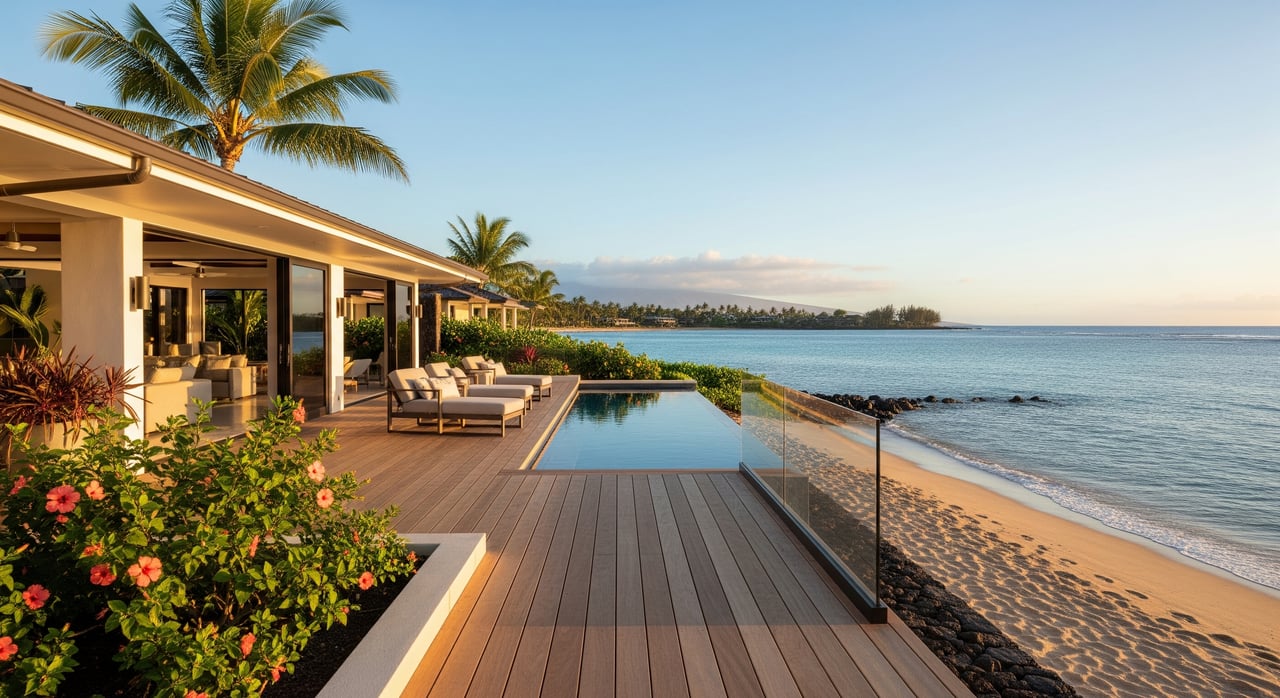
Is your heart set on the sound of waves at your doorstep, or would you rather enjoy sweeping blue horizons from a quiet perch uphill? If you are weighing oceanfront against oceanview in Napili‑Honokowai, you have great options, but each path comes with different costs, risks, and rules. It can feel like a maze of terms, permits, and insurance details. This guide breaks down what matters most so you can choose with clarity, protect your investment, and enjoy island living with fewer surprises. Let’s dive in.
Oceanfront vs. oceanview
Oceanfront means the property directly borders the shoreline and typically has unobstructed, immediate access to the ocean. In Hawaii, that often places the structure within a dynamic shoreline zone that can be influenced by waves, tides, and erosion.
Oceanview means you have a clear view of the ocean, yet the property is separated from the shoreline by land, a road, or other properties. You still get the view, but you are generally less exposed to direct wave action and coastal flooding than true oceanfront.
Why it matters: In Hawaii, rules rely on the legally certified shoreline and the high‑water line, not just marketing language. Always confirm where the certified shoreline sits for a specific parcel. That line drives setbacks, permits, and what you may rebuild later.
Napili‑Honokowai shoreline context
Napili‑Honokowai sits on West Maui’s leeward coast. You will find a mix of beachfront homes, condominium resorts, and vacation‑rental friendly properties near beaches like Napili Bay. The area offers reef‑protected waters in places and signature sunsets, yet the coast still experiences seasonal wave energy, long‑term erosion patterns, and occasional storm surge or wind events.
Hawaii recognizes public rights to the shoreline under the public trust doctrine. The public typically has access up to the high‑water mark, while private property is landward of that line. As a buyer or seller, verify where lot lines sit relative to the certified shoreline and any recorded beach access easements.
Rules that shape what you can do
SMA and setbacks
Much of the coast falls within Maui County’s Special Management Area. Projects near the shoreline may require SMA review and permits, and County shoreline setbacks apply. Before planning any improvements, confirm whether the parcel is in the SMA and which setback standards are in play.
DLNR and shoreline structures
The State Department of Land and Natural Resources oversees shoreline certifications and regulates hardening such as seawalls or revetments. New shoreline hardening can be difficult to permit because of impacts to beaches and sediment movement. Do not assume future protection measures will be allowed without a thorough review.
Zoning and HOA rules
Condominiums and coastal subdivisions often carry HOA rules that govern exterior work, maintenance standards, and rental operations. Review CC&Rs, rental policies, and any restrictions on modifications before you commit.
Rebuildability
If a coastal structure is damaged, rebuilding in the same footprint can be limited by setbacks or a new shoreline determination. Ask early about prior permits, any violations, and whether current rules would restrict replacement or expansion.
Risk, insurance, and financing
Flood zones and erosion
Oceanfront parcels commonly fall within FEMA V zones or other Special Flood Hazard Areas where wave action and inundation risks are higher. Elevated oceanview parcels are more likely to be in lower‑risk zones. West Maui is included in statewide sea‑level rise studies, and local maps can show projected inundation and shoreline change scenarios over time. These risks influence insurability, future permitting, and resale.
Insurance basics
If you finance a property in a Special Flood Hazard Area, your lender will typically require flood insurance. Flood coverage is separate from homeowners insurance. In Hawaii, homeowners policies often include special wind or hurricane deductibles. Premiums and availability can change after major events, so obtain quotes early in your purchase process. Expect differences between oceanfront and elevated oceanview addresses because of exposure.
Lender considerations
Some lenders may be cautious with properties that show high erosion risk or limited rebuildability. Get pre‑approved and ask your lender about underwriting for coastal hazards, flood zones, and properties with shoreline restrictions.
Value and rental dynamics
What drives the premium
Oceanfront tends to command a premium for direct access, uninterrupted views, and prestige. Napili‑Honokowai’s vacation appeal can amplify this, especially for buyers who value the beach experience or plan to rent to visitors. The size of the premium varies with location, unit type, privacy, beach quality, and perceived risk.
Volatility and resale
Oceanfront values can be more volatile across time. Changes in erosion patterns, insurance costs, or shoreline regulations can influence buyer perception and financing, which affects pricing and days on market. Oceanview often reaches a broader buyer pool and can offer steadier resale dynamics with lower exposure to coastal hazards.
Short‑term rental potential
Vacation demand in Napili‑Honokowai has historically been strong. Oceanfront units often achieve higher nightly rates, while occupancy and revenue depend on season, tourism trends, and unit quality. Maui County regulates short‑term rentals, and rules can change. Confirm current County policies, zoning, and HOA rules for any property you are evaluating.
Maintenance and operations
Salt‑air exposure accelerates corrosion and wear. Oceanfront homes and buildings often need more frequent exterior maintenance, fastener and hardware replacement, and diligent roof care. Condominiums on the coast should maintain robust reserve studies and planned capital projects for exterior elements and drainage. When you review HOA documents, look for evidence of proactive maintenance in salt‑exposed environments.
Buyer due diligence checklist
- Confirm the certified shoreline. Obtain a shoreline certification or survey that shows the high‑water line relative to structures.
- Check SMA status and setbacks. Verify whether the parcel is in the Special Management Area and which shoreline setback standards apply.
- Review permits and violations. Ask for records of prior work, any shoreline stabilization permits or denials, and open violations.
- Assess erosion and stability. For oceanfront, consider a coastal engineer or geologist to evaluate erosion patterns, bluff stability if applicable, and remaining setbacks.
- Inspect structural systems. Focus on foundation, fasteners, corrosion, rot, roof condition, and HVAC performance in a marine environment.
- Verify utilities and drainage. Confirm sewer or septic capacity and assess stormwater runoff, since poor drainage can worsen flooding.
- Get insurance quotes early. Compare NFIP and private flood options, plus homeowners and wind coverage for the exact address.
- Confirm lender policies. Ask how the lender treats properties in V zones or those with restricted rebuildability.
- Review HOA health. Study financials, reserve studies, planned coastal projects, and rules governing exterior work and rentals.
- Validate rental status. If you plan to rent, confirm County short‑term rental eligibility, tax registrations, HOA rules, and historical performance.
Seller tips to maximize value
- Document shoreline and permits. Provide surveys, shoreline certifications, and permit history to build buyer confidence.
- Disclose insurance context. Share available policy info or typical premium ranges if you have them, and clarify that rates vary by address.
- Prepare maintenance records. Coastal buyers value evidence of proactive care, including corrosion protection and recent exterior work.
- Clarify rental status. If applicable, present short‑term rental history, tax registrations, and management details to support value.
- Price with local comps. Compare recent sales of similar property types, distinguishing oceanfront from oceanview to set realistic expectations.
Which is right for you
Choose oceanfront if you want the closest possible connection to the water, value the experience of beach access, and accept higher maintenance, insurance, and regulatory complexity. Work with your agent to underwrite those costs and confirm rebuildability before you fall in love.
Choose oceanview if you value vistas and breezes with generally lower exposure to wave action, simpler insurability, and a broader resale audience. Elevated oceanview can deliver much of the lifestyle at a different risk and cost profile.
Work with a local, integrated team
The most confident decisions in Napili‑Honokowai come from pairing local shoreline insight with disciplined operations. Maui Life Realty combines boutique brokerage with in‑house vacation rental management, so you get guidance at purchase, smart preparation for permits and insurance, and clear revenue planning if you intend to rent. Whether you are targeting oceanfront prestige or an elevated oceanview gem, you will have a single accountable partner from offer to ongoing ownership.
Ready to compare specific properties and risk profiles side by side? Connect with Maui Life Realty for local comps, insurance introductions, and a practical plan that aligns with your goals. Make Maui Your Life. Start Your Search.
FAQs
What legally counts as oceanfront in Hawaii?
- In practice, oceanfront directly borders the shoreline, but regulations rely on the certified shoreline and high‑water line. Confirm the certified shoreline for the parcel before assuming oceanfront status.
How do prices compare for oceanfront vs oceanview in Napili?
- Oceanfront often sells at a premium due to access, views, and rental potential, but the gap varies; review recent local comps by property type to understand current price trends.
Can I build a seawall if erosion threatens my property?
- New shoreline hardening is often restricted because of beach impacts; approvals depend on site conditions and rules, so do not assume a seawall will be permitted without expert review.
How do flood and homeowners insurance differ by location?
- Properties in Special Flood Hazard Areas, especially V zones, usually require flood insurance and may face higher premiums; elevated oceanview homes typically have different risk and cost profiles.
What permits could affect rebuilding after storm damage?
- County shoreline setbacks, SMA rules, and an updated certified shoreline can limit rebuilding in the same footprint; confirm rebuild rights with planning staff and qualified consultants.
Are oceanfront properties harder to finance or resell?
- They can be more sensitive to lender underwriting, insurance availability, and changing shoreline regulations, which can influence time on market and pricing.
How do Maui’s short‑term rental rules affect income potential?
- Maui County regulates short‑term rentals by zone and property type, and HOA rules may add limits; verify eligibility, permits, and compliance before underwriting revenue.
What inspections should I order before closing on a coastal home?
- In addition to a general inspection, consider a coastal engineer assessment for erosion and structure exposure, plus reviews of drainage, roof, fasteners, and HOA reserve studies for condos.