A buyer looking at a unit inside Kaanapali Ali'i today sees a maintenance fee printed on the listing sheet, somewhere between $1,783 and $2,558 a month depending on the unit's size and stack. That number reads like a fact. It is closer to a photograph: a picture of what the association's insurance and operating budget cost at the moment the last renewal was signed. The building behind that number is 44 or 45 years old, sits directly on Kaanapali Beach, and carries its master insurance policy through a Hawaii property insurance market that state regulators openly describe as "hard." Nothing about that combination suggests the fee on today's listing sheet is the fee you will still be paying in three years.
That gap between the printed number and the underwritten number is the thing worth understanding before anyone writes an offer here.
The Building Behind the Number
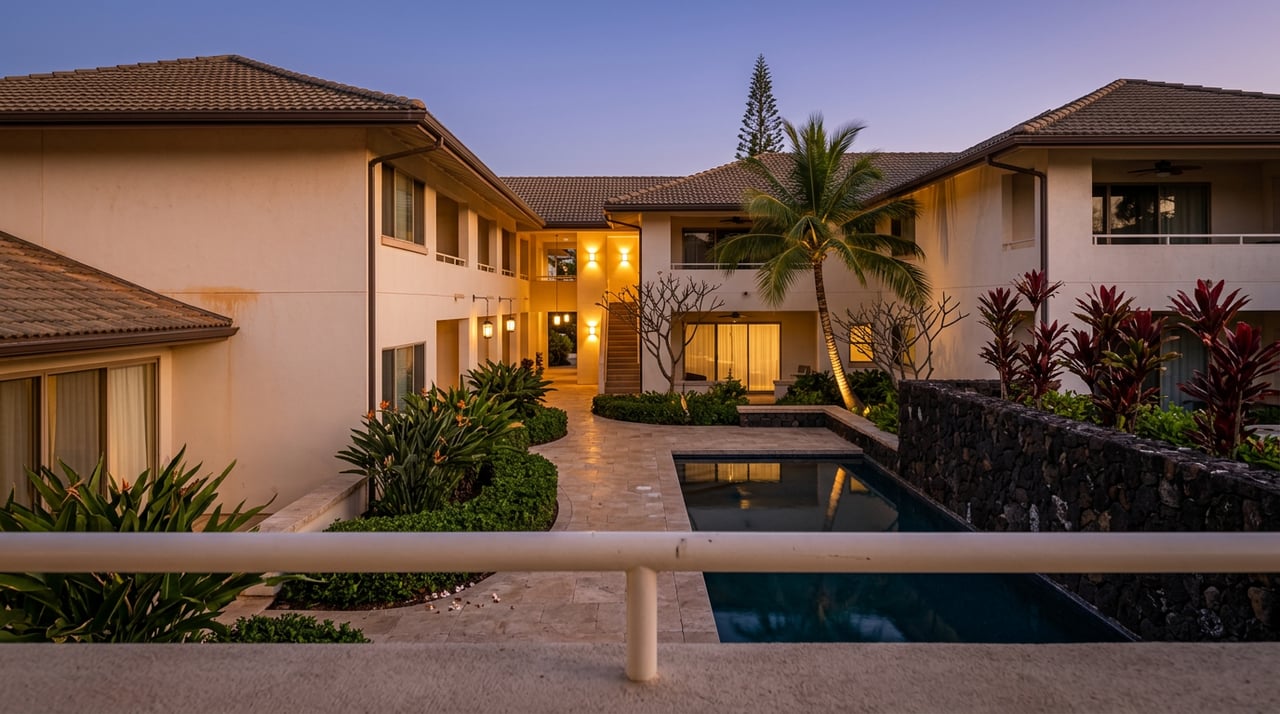
Kaanapali Ali'i went up between 1981 and 1982: four 11-story towers on 8.01 acres of beachfront land, 264 units total, most running 1,300 square feet or larger with two full bathrooms. It is one of the more recognizable names on this stretch of West Maui, a short walk from Whalers Village and Black Rock, and it has drawn the same kind of returning guest base for decades.
It also falls squarely into a category Hawaii's Department of Commerce and Consumer Affairs calls out by name in its own guidance on condo insurance: buildings from the 1970s and 1980s, now more than 40 years old, where components like plumbing, windows, decking, and railings are reaching or passing the end of their useful life. That is not a knock on how the property has been maintained. It is a description of the physics every association in that age bracket eventually confronts, and it is one of the reasons the department cites for assessments and fee increases showing up across the state's older buildings.
What One Recent Listing Actually Costs Each Month
Numbers help more than adjectives here. One Kaanapali Ali'i unit listed this year, a one-bedroom plus den with ocean and mountain views, carried an asking price of $2,395,000, an annual property tax bill of $28,116, and a monthly maintenance fee of $2,493.17. Break the tax down to a monthly figure and stack it against the fee, and the picture looks like this before a single mortgage payment enters the equation:
| Cost line (based on one 2026 Kaanapali Ali'i listing) | Monthly amount |
|---|---|
| Property tax ($28,116 annual ÷ 12) | $2,343 |
| HOA / maintenance fee | $2,493 |
| Combined, before financing | $4,836 |
The HOA fee is the larger of the two lines. It is also the one most likely to move in the next renewal cycle, because unlike a tax assessment, which changes on a predictable annual schedule tied to county valuation, a condo maintenance fee moves whenever the association's insurance premium resets, whenever a reserve study gets updated, or whenever a special assessment gets voted through. Property tax is a known quantity. The HOA line is the one that behaves like a variable.
Why Hawaii's Insurance Market Changes the Math
The mechanism worth understanding is not specific to this building. It is the environment every Hawaii condo association is currently operating inside. The state's insurance division describes it as a hard market: insurers tightening underwriting and raising premiums after a run of costly disasters, reinsurance getting more expensive as insurers who cover insurers reprice their own risk, and only a small handful of admitted, state-regulated carriers still willing to write master policies on condo buildings at all. When one of those carriers non-renews a building, the association often has to turn to excess or surplus lines insurers, companies not licensed or rate-regulated by the state, which can and do charge significantly more for coverage nobody else will write.
The scale of what that looks like statewide is documented in the University of Hawaii Economic Research Organization's 2026 Housing Factbook: aggregate property insurance premiums collected across the state grew 13.4 percent in 2024, the largest single-year increase in at least a decade, well above the roughly 9.7 percent national figure for the same period. UHERO's researchers also cite individual condo developments where policy renewals came back with rate increases exceeding 1,000 percent, a scenario severe enough that some owners have reportedly dropped coverage entirely rather than pay it.
Nothing in the public record ties a specific renewal figure to Kaanapali Ali'i's own master policy, and that is worth saying plainly rather than implying otherwise. But the building sits at exactly the intersection point regulators and researchers describe when they explain who gets hit hardest in this market: older construction, oceanfront exposure, and a large insured value spread across hundreds of units. A buyer underwriting a purchase here is underwriting a fee that could move considerably at the next renewal, not just one that has stayed roughly flat for the last few years.
The List That Doesn't Quite Fit
A smaller but genuinely useful oddity turned up while researching this building's paper trail. Kaanapali Ali'i is generally treated in the market as a hotel-zoned property, the category of condo that Maui's ongoing short-term rental phase-out under Bill 9 does not touch. But at least one longtime Hawaii real estate brokerage has flagged, in its own review of the county's short-term rental roster, that Kaanapali Ali'i also appears on the county's separate "Minatoya" list, the roster built specifically for apartment-zoned buildings that were grandfathered into vacation rental use. The brokerage called it a contradiction to the intention of the list, and left it as an open item to resolve rather than a settled fact.
That inconsistency probably will not change what a buyer can do with a unit here. It is a useful reminder of something more general: at a building with this much history and this many decades of paperwork behind it, the label on an MLS sheet or a marketing page is not the same thing as the parcel's actual zoning designation on file with Maui County. Anyone underwriting a purchase for its rental potential, at this building or any other on this coastline, should pull the parcel's zoning directly rather than take a listing description at its word.
Before writing an offer at a building like this, a short list of documents does more work than any fee sheet:
- The association's most recent reserve study, showing what percentage of recommended reserves is actually funded
- The master insurance policy's declarations page, including the replacement-cost percentage and the renewal date
- Board meeting minutes from the last 12 to 18 months, which usually surface any assessment discussion before it becomes public
- Confirmation of the parcel's current zoning designation directly from the county, independent of what any listing states
What's Actually Underway Right Now
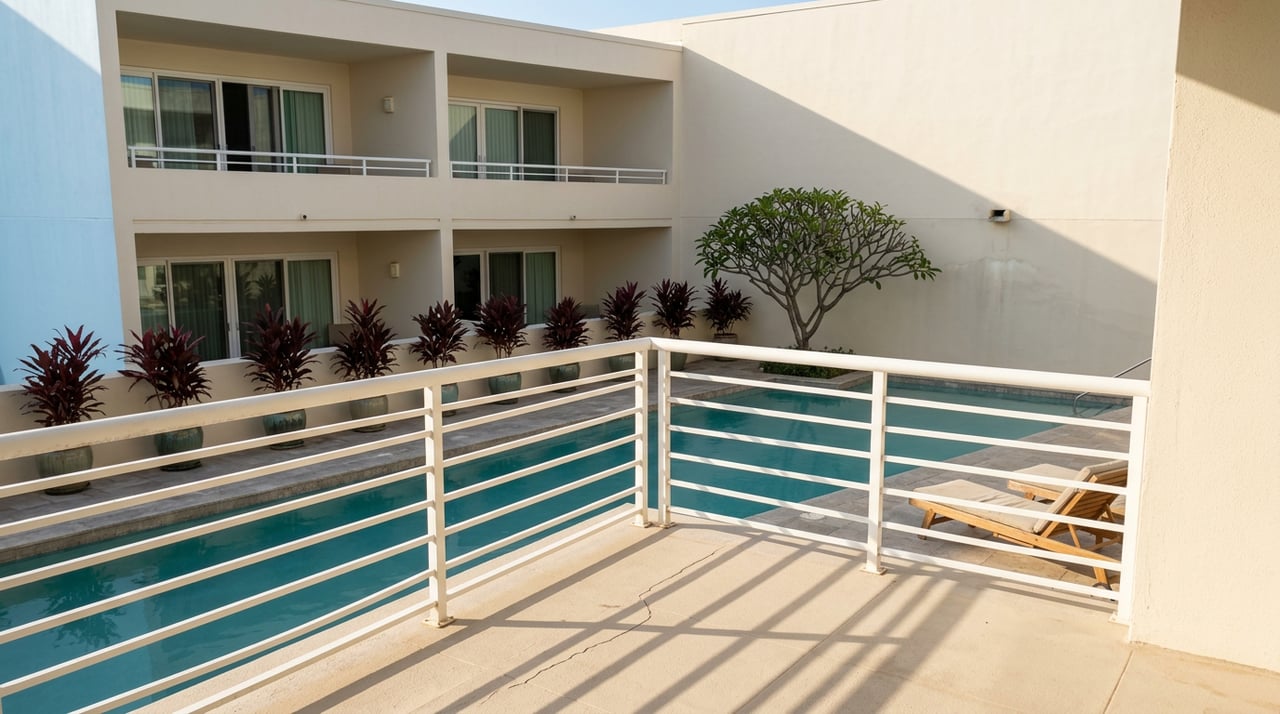
Two live items at the property underline that this is not a hypothetical exercise. A pool pavilion improvement project has been underway at Kaanapali Ali'i, with the main pool, seating, and barbecue areas staying open through construction but with intermittent noise expected through October 23, 2026. Separately, the stretch of oceanfront walkway the resort owns has been affected by beach erosion severe enough that rebuilding it requires state permits Maui County may not readily grant, a dynamic tied to the same coastal erosion pressures documented up and down this part of Kaanapali Beach. Neither item shows up on a maintenance fee sheet today. Both are exactly the kind of capital need that eventually does.
What This Means If You're Looking Here
None of this argues against buying at Kaanapali Ali'i. The location, the beach frontage, and the building's long operating history are real and durable advantages. It argues against budgeting from the printed HOA figure as though it were fixed. The honest way to model ownership here is to treat today's fee as a floor, ask for the three documents above before going under contract, and build a stress case into your own numbers for what happens if the next insurance renewal lands anywhere near what other Hawaii associations have reported in this same hard market.
If you are weighing a purchase at Kaanapali Ali'i or comparing it against other West Maui resort buildings, Maui Life Realty can walk through the association's actual financials with you before you write an offer, not after. Make Maui Your Life. Start your search.
FAQ
How old are the Kaanapali Ali'i buildings? The four towers were built between 1981 and 1982, making them roughly 44 to 45 years old as of 2026.
Is Kaanapali Ali'i affected by Maui's Bill 9 short-term rental phase-out? It is generally treated as a hotel-zoned property, which sits outside Bill 9's phase-out of apartment-zoned "Minatoya List" units. At least one Hawaii brokerage has noted the building also appears on the county's Minatoya roster, an inconsistency worth confirming directly with the county rather than relying on any listing description.
What should I ask for before making an offer on a unit here? At minimum, the association's most recent reserve study, the master insurance policy's declarations page with its renewal date and replacement-cost percentage, and recent board minutes covering any assessment discussion.