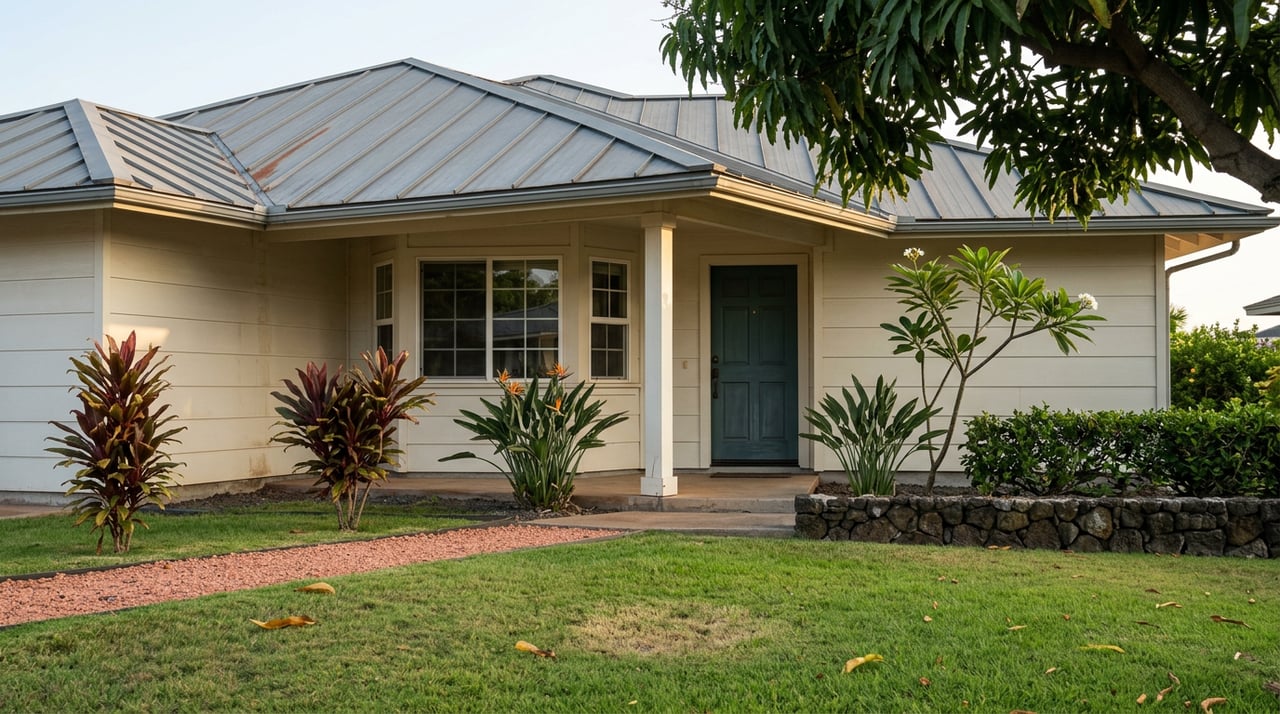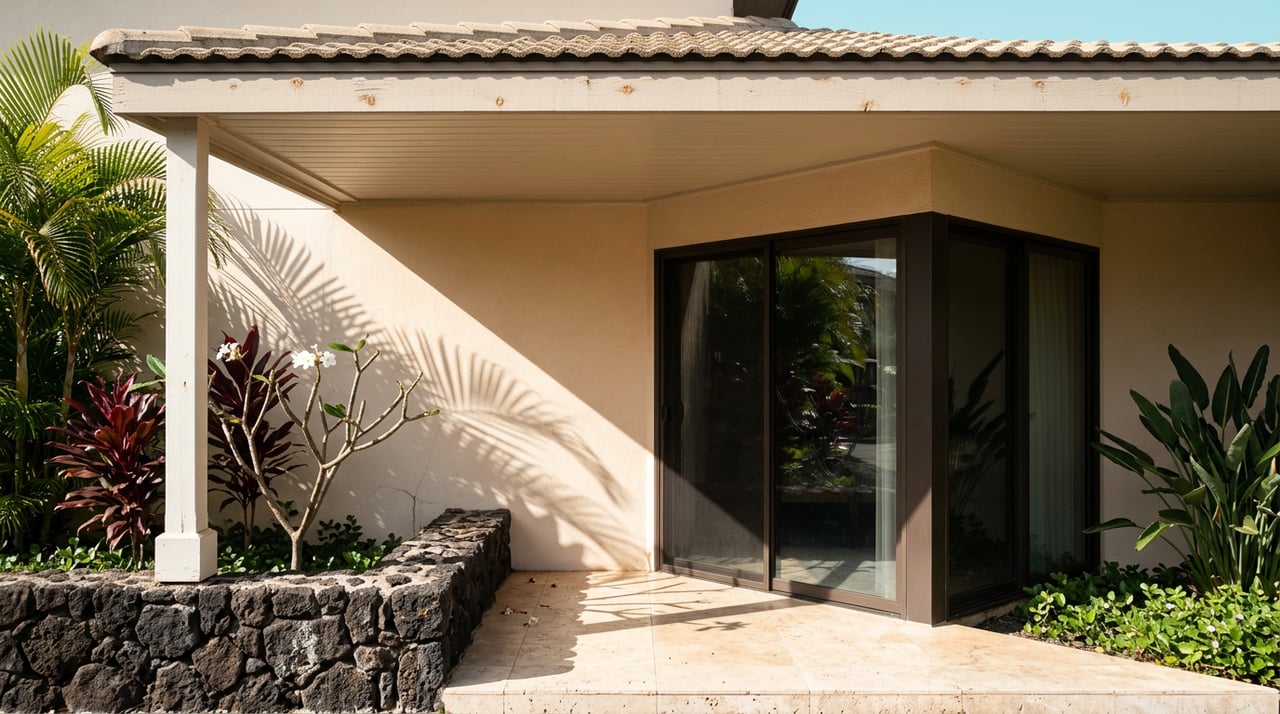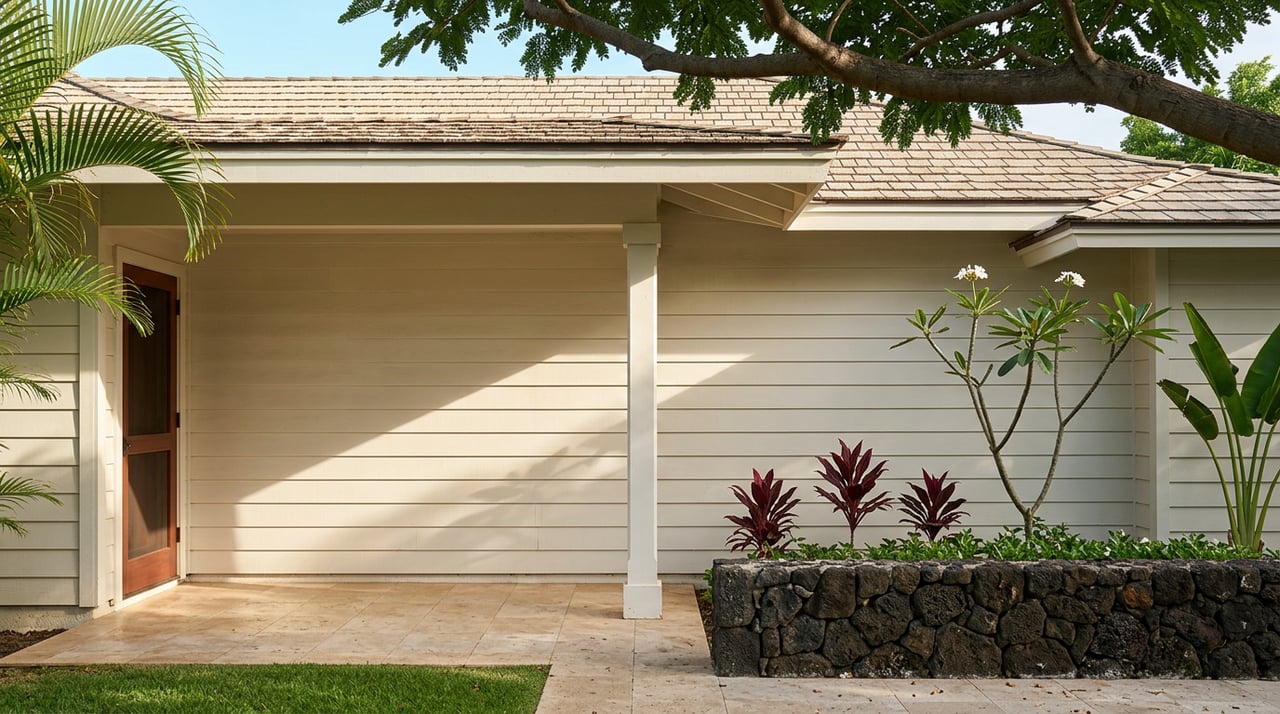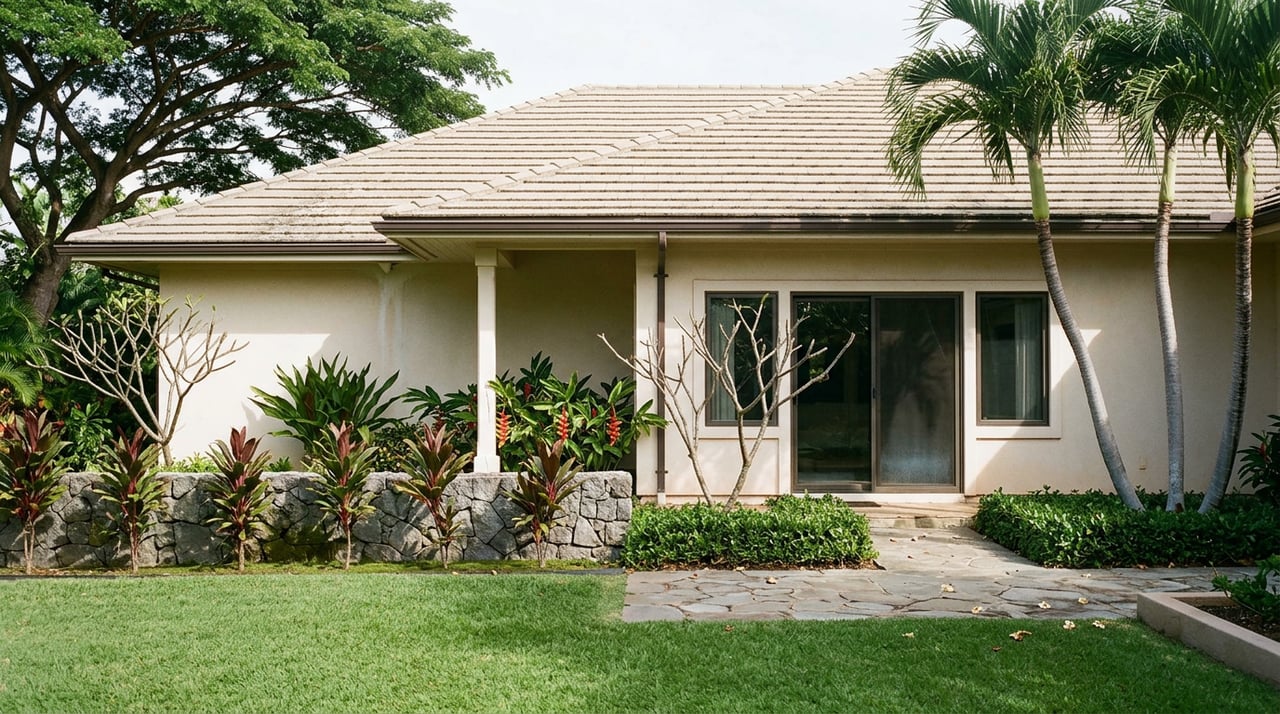
What's the least useful number in a Wailea Golf Estates listing right now? It might be the one everyone leads with: the price per square foot.
Ask around Wailea this month and you'll hear about Bill 9, the ordinance phasing out short-term rentals across an estimated 6,200 to 7,000 apartment-zoned units on Maui. You'll hear about the July 2026 Ninth Circuit ruling that just reopened the door to short-term rentals at Wailea Point, reversing a 2022 owner vote. You'll hear condo owners a few streets over from Wailea Golf Estates trying to figure out whether their building qualifies for the county's new hotel-zoning workaround. None of that conversation touches the 61 lots behind the gate off Wailea Ike Drive. Not because Wailea Golf Estates got an exemption. Because it was never in the fight to begin with.
The Fight Next Door
Bill 9, formally Ordinance 5909, became law in late 2025 after Mayor Richard Bissen signed it following a 5-3 County Council vote. The ordinance phases out transient vacation rental use across Maui's apartment-zoned complexes, the buildings that make up what's known locally as the Minatoya List. West Maui properties face a January 1, 2029 deadline. The rest of the county follows on a timeline that different county communications have placed at either 2030 or 2031, a detail worth confirming directly with the county if a specific building's deadline matters to your decision.
That single ordinance touches Wailea Ekahi, Wailea Ekolu, Wailea Elua, the Palms at Wailea, and dozens of other condo projects across South and West Maui. In response, the County Council passed a companion law in June 2026, Bill 88, creating two new hotel zoning classifications, H-3 and H-4, that let qualifying apartment-zoned buildings apply to keep their rental rights. On July 24, 2026, the Council advanced resolutions sending more than 2,000 of those units into the review process, a vote of 7-1. None of it is automatic. A property entering the review process is not a property that has secured anything yet.
Layer onto that the Wailea Point case. In 2022, roughly 70 percent of that community's owners voted to stretch the minimum lease term from 30 days to 365 days, effectively ending short-term rentals there. This July, the Ninth Circuit ruled that vote invalid, finding the community's governing documents required unanimous consent for a change that restrictive, not a supermajority. The 30-day minimum is back, at least for now, and the association still has room to pursue further legal action. Whatever happens next, it happens through litigation over a specific building's declaration, not through anything that reaches a single-family home a half mile away.
The Gate That Settled the Question Decades Ago
Wailea Golf Estates carries R-3 Residential zoning. Under Maui County's rules, that zoning simply does not permit vacation rentals. Not a phase-out, not a sunset clause, not a pending appeal. The base zoning already answers the question that's consuming so much attention next door.
R-3 Residential zoning. No short-term vacation rentals. Long-term rentals defined as six months or longer under Maui County practice.
Owners here have three paths, not the wide-open menu a resort condo owner might expect. Live in the home 270 days or more a year and you qualify for the county's owner-occupant tax exemption. Rent it out and you're renting long-term, six months minimum, to a tenant who's actually living there. Or hold it as a second home you visit without renting it at all. There's no fourth option where you list it on a vacation rental platform for a week at a time, because the zoning line was drawn before any of Maui's current rental debate started.
That's a genuinely different ownership proposition than a condo purchase tied to the Minatoya List, where the value of the unit is partly a bet on how a specific building's zoning review turns out.
| Wailea Golf Estates | Typical Minatoya-List Wailea Condo | |
|---|---|---|
| Base zoning | R-3 Residential | Apartment District |
| Vacation rental status | Not permitted, by zoning | Phasing out under Bill 9, unless rezoned |
| Path to short-term income | None | Possible via H-3/H-4 rezoning, not guaranteed |
| Governance risk | Settled at the county level | Subject to litigation over building-specific declarations |
| Typical use case | Primary residence, long-term rental, or personal second home | Vacation rental income, now uncertain |
What the Portal Shows You Instead
Instead of a rental calendar, what you get behind the Golf Estates gate is an owners' portal. The community runs its own homeowners association site, where residents log in to request gate codes, submit guest approval forms before visitors arrive, and check a published construction holiday calendar before scheduling work crews. There's a homeowner directory for neighbors who want to reach each other directly, and a set of landscape guidelines the association calls Landscape Harmony, aimed at keeping mature plantings and view corridors consistent from one lot to the next.
None of that is resort-condo governance. It's the machinery of a residential subdivision that happens to sit inside a golf resort, which tracks with the zoning underneath it. If you're coming from a Minatoya-List purchase where the HOA's main job is managing a rental calendar and a front desk, the paperwork here will feel different from day one. Guests need to be approved. Gate codes need to be requested. Construction has a calendar it has to work around.
The Number That Actually Matters
The price band most listing sites quote for Wailea Golf Estates runs from roughly $2 million to $8 million, with an average sales price around $1,097 per square foot in recent market snapshots. Lot sizes vary depending on which source you check, generally somewhere between 10,000 and just over 23,000 square feet, spread across 61 homesites on about 30 acres bordered by fairways of the Wailea Blue Golf Course. A newer phase, Wailea Golf Estates II, added 16 more parcels in the 12,000 to 15,000 square foot range, each one built out individually as owners buy the lot and commission their own home, a process that stretches over several years rather than delivering all at once.
Those numbers describe the neighborhood. They don't describe what makes it different. What makes it different is how few of those 61 lots actually change hands. Public sales records tracked for the community show closings as recent as April 2026 and September 2025, but the gaps between other recorded sales stretch across 2024, 2021, 2018, and 2016 for specific addresses. That's a market where comparable sales are genuinely scarce, closer in spirit to appraising a one-off custom estate than pricing a unit in a 150-unit condo tower with dozens of transactions a year to draw from.
That scarcity cuts both ways. A seller here isn't competing against a wall of similar listings the way a Minatoya-List condo owner might be. A buyer doesn't get the comfort of ten recent closings to lean on when negotiating. Either way, the price per square foot is a starting point for a conversation, not a formula you can run on your own.
Who This Fits
This neighborhood makes the most sense for a buyer who already knows they want to live in the home, rent it long-term to someone who's actually going to live there too, or hold it privately without expecting rental income to offset the carrying cost. If short-term rental yield is the primary reason for buying in Wailea, the zoning here rules that out before you get to the gate. If stability and a settled use case matter more than yield, the fact that this community was never part of Bill 9, never subject to a Minatoya-List review, and never one court ruling away from a different set of rules is the actual advantage, not a footnote.
FAQ
Can Wailea Golf Estates ever be rezoned to allow short-term rentals? Zoning changes are possible in theory anywhere in the county, but nothing in the current record suggests any effort to change Wailea Golf Estates from R-3 Residential. The hotel-zoning pathway created by Bill 88 applies to apartment-zoned buildings already on the Minatoya List, a different category of property entirely.
What counts as a long-term rental here? Maui County treats six months or longer as long-term. A lease shorter than that would fall into short-term rental territory, which the zoning here doesn't permit.
Does the owner-occupant tax exemption require full-time residency? It requires spending 270 days or more per year in the home as your primary residence. Anything short of that puts you into the second-home or long-term-rental tax classification instead.
If you're weighing a Wailea Golf Estates purchase against a condo further down the resort, or trying to figure out how a specific building's Bill 9 status might affect its value, that's exactly the kind of comparison Maui Life Realty works through with buyers every week. Make Maui Your Life. Start Your Search.